This is a very sad occasion to write a blog entry. Somehow I am “too busy” to sit down and tell you guys what I’ve been doing here so long as my biggest problem is my research paper. But today, I was reminded that there are much larger problems in this world. Today I learned that Cecil Sitela, one of the Sizophila counselors with whom I worked, was murdered last Saturday night. He was only 34 years old – two children survive him who have no mother. He had a girlfriend in the area, a mother in the
Cecil was one of only three male counselors at the clinic in Gugs. He was one of the newest employees; he only started this job last March. I did not work with Cecil very closely, but I did interview him last week for my own research paper. He was a quiet but friendly man who gave everyone his undivided attention. I can remember being very excited by his level of concentration with each question I asked. Unfortunately our interview was more brief than usual, mostly because at the time I was unsure of whether my study would even include men, and partly because we were interrupted multiple times. In the time we did have, we spoke about his leadership role in the community, how he spearheads men’s counseling groups and organizes support groups. Prior to his work as a counselor, he had sporadic contract jobs as a painter, but he dreamt of going to school and becoming a carpenter. Cecil took great interest in learning more about HIV because he lost family members and friends to AIDS. He lived in
Tomorrow I will be attending Cecil’s funeral at his home after work. I am guessing I won’t get to the internet, so I will probably write more about the funeral and then post this on Wednesday. Hopefully I will be able to share more details of what happened, but for now all I know is that he was murdered by a patient’s boyfriend around 2am on Saturday night/Sunday morning. Apparently he was called for help so he got out of bed and went to the patient’s house where he was stabbed to death by the boyfriend. I do not yet know why, but I could project many unappealing reasons. Perhaps the boyfriend was jealous or suspicious of the male counselor working with “his” woman, or maybe he was angry that Cecil brought the topic of HIV into the home. Maybe the woman called Cecil for help because she was disclosing her status to the boyfriend and he wasn’t reacting well, and when Cecil arrived, he pulled out a knife. I am not going to bother guessing any further because none of these reasons bring me any piece of mind. All I can picture is the kind and unassuming Cecil, coming to offer his help, and in the end sacrificing his life.
Cecil told me that he hoped to work for the Desmond Tutu HIV Foundation for just a few years, maybe three of four, so that he could go back to school and work to fulfill his dreams. He hadn’t yet been here a year. In this line of work, it is the women who are most afraid for their lives, fearing rape as they walk alone through squatter settlements where they are looking for unfamiliar houses in unfamiliar neighborhoods. The male counselors are supposed to be safe. I cannot stop thinking about how HIV killed Cecil. It did not physically take his life, but his status and his work did ultimately lead him to his premature death. I am struggling to digest the injustice of it all.
Before I get myself going and really get worked up, I want to share the reactions of the other counselors today to compare such loss in the States to this kind of loss here. First of all, I showed up at the clinic at around 10 am this morning after a meeting at the headquarters in
It was relayed to me that I had missed a morning meeting in which the counselors could cry and share their feelings on the situation, but I still expected these tears to be present throughout the workday. If an employee had been murdered while I was working at NJP&A last summer, I don’t think there would have been work on Monday morning. I think psychological support would have been provided and work would have been postponed or made optional. But an HIV clinic never closes. There are patients to be helped. Here, where death and murder are not quite as unusual as they are to me in the States, the sadness was palpable but the excuse to take some time off non-existent.
I won’t write anything else tonight; I want to just think about the day and I will save the rest for tomorrow.
The Service:
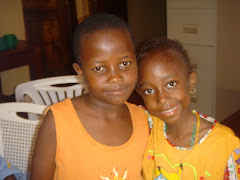
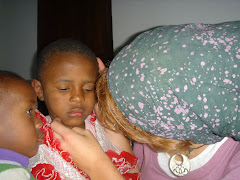
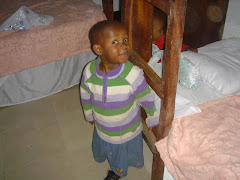
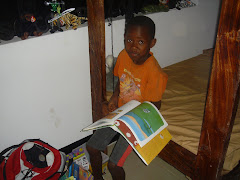
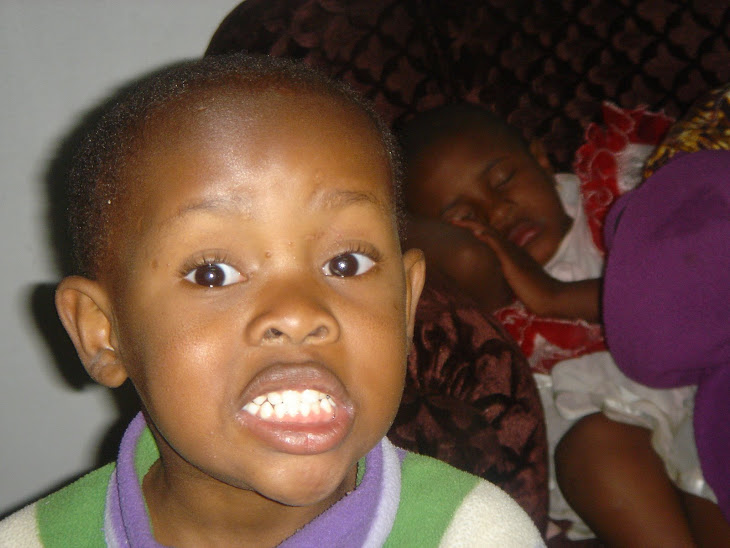
Today I felt more enmeshed in the Gugulethu community than I ever thought a study abroad program could make possible. I know that I wrote yesterday about feeling isolated and separate, but today was totally different. I came to the clinic in the morning and found everyone in a bit better spirits than the day before. I had a two-hour interview with Flora, the head counselor of the pediatric unit, and I visited with a little friend of mine, a hairdresser, if you will, who I met a week or two ago on an unproductive day. I spent about an hour on the curb with her and came out of the situation with more knots than my hair knew (even in the days of “magic brushes” and maple syrup). A little boy was a co-conspirator in this destruction, and his tactics were to straight up dreadlock my hair. It was exactly the fun I needed today. I kept wondering if I will see the little girl and her mother, the pair I’ve written so much about, but this was a nice alternative. The little girl I played with today doesn’t look as healthy as the two-year-old I met a while back. She is extremely thin and her baby teeth are rotting. She looks to be about 4 years old. I first met her in the waiting room of the clinic on a day that I was avoiding the pregnancy study and prowling for little kids to make mischief with. I spent much of that afternoon being fought over by two little girls who both had to have equal shares of my lap, and again, my hair. Today I found my little friend snoozing in the sun on the curb outside of the clinic. I again did not see her with her mother. I get the vibe she’s an independent 4-year-old. Anyway, she remembered me immediately and burst into laughter. Her laugh is so difficult to describe; it’s always brief, but extremely high-pitched and is accompanied by a glowing smile and dancing eyes. She found her way back onto my lap and proceeded to “deflate” my cheeks with her fingers as I blew them up with air. Each time it was like she didn’t know what to expect, and each time she cackled as I blew air in her face. From there we moved on to my weekly hairdo, and before I knew it I had a second hairdresser as well.
After my head was sufficiently knotty, I said my goodbyes and headed back inside. There I found all of the counselors had finished their meeting and were busy practicing hymns for Cecil’s service. We made our way over there at around 2:45, accompanied by a few doctors and nurses from the clinic as well. His house was not far from Hannan Crusade, and it was a formal home (not a shack, or informal house). The front yard was covered in a tent and packed full of chairs. The house had three rooms, a small bedroom, a kitchen, and an open living room. The front room, the living room, was also lined with chairs, so we filed in and took our seats to begin the service. This whole time, I was wondering where his family was sitting and what exactly was going to happen. And for the next 90 minutes, “we” sang and eulogized Cecil. I say “we” in quotations, because my contribution consisted of standing up and clapping and swaying with the best of them. Xhosa has never sounded so beautiful to me. Even though I could not understand any of the hymns, they were more powerful than any song sung in English in such a situation. Quite a few people I’ve known have died this past year, but funerals and memorial services have never held as much meaning as this service did today. Ironic, isn’t it, since I couldn’t understand a word that was spoken.
Mostly, my mind kept racing back to Kaity’s funeral, and while the level of pain is incomparable, I remember leaving the funeral home wanting more closure, wanting to believe all the words that were said, and that I had echoed, that urged everyone to let her go and not to stay sad for too long. In Cecil’s service, the singing was almost like a purging experience. I cannot think of a better way to explain it. People sang through their tears and got louder as they went. One of the counselor’s had a cushion that she pounded to the beat and everyone else clapped along. It was the most beautiful emotional expression I’ve ever experienced. In between each song, someone eulogized Cecil. Sister Lulu, one of the staff at the clinic, actually went in and out of English in her speech, so I was able to follow her words, which were about him having done everything he came here to do. She said that it was time for him to go home, that our home is not this Earth, and we must not be sad. Rather, we must say goodbye to a dear friend and let him go. Maybe it was because I did not know Cecil very well that I was more able to buy into that, or at least to find it soothing, because with Kaity, those same words would not have eased my pain. I wondered how in a death so tragic, a murder, people could find such peace and let go of their anger. Part of me believes there is something to be said that the people I work with are more “used” to death than we are in quaint
I could easily keep writing about the feelings I had in that service as we all cried and shared each other’s sadness, but I really am running out of time to write. So I’ll fast-forward to the end of the service, when I finally met Cecil’s family. We presented his aunt with a collection of money we all compiled (I only had 35 rand with me, about five or six dollars – nowhere near the amount I would have liked to have given) and then his aunt thanked us and welcomed us to have soda and cornbread. We made our way into the bedroom to give our condolences to his relatives and his girlfriend, but his mother was not around. Cecil had told me she lived in the
People started to leave after a few announcements about another memorial to be held on Thursday and the actual funeral (which I plan to attend) on Saturday. I had thought that today was this funeral, but as it was put to me by
Or maybe, I will wake up and this all will have been a dream. I will still be a borderline member of this community and I will still be spared of its most intimate traumas. Part of me hopes that will happen, because I fear that now I have become both more infuriated with the world for these injustices and more appreciative of this society for its strength. I am wrapped up in Gugulethu now as I am in





4 comments:
Dear Jilly,I am speechless after reading your latest entry. Your words humble me and I am so thankful for you sharing these hard experiences with us.Love, Mom
Honey, what can I say? I feel like crying for both Cecil and you, both heroes in my book. I miss you sweetheart and want to give you a big hug right now! Love, Grandma
Hey Jillian, its Trev. Sorry I havent posted yet but this blog really got to me. I can't imagine what it must be like there. Cecil sounds like he was a great man, and it is terrible that something like this happened to him. On a lighter note have a great ThanksGiving. I cant wait to have you back. It wont be too long now though...
Love,Trev
Jill, Its hard to write through these tears-- for Cecil, his family, for you & for all of us, its so overwhelming to imagine a life snuffed out like that- so senselessly. It worries me all the more for you. Come home safe, I can't wait to see you again!
Love, Aunt Hope
Post a Comment