Friday, October 12, 2007

The Hannan Crusade HIV Clinic

Hello again. It’s Sunday afternoon here, finally a day with a little down time to write. I am not sure when I’ll actually get to the internet to post this, but I have some free time before our movie for class and I thought I should get some stuff down. Where should I even begin this time? I want to discuss the environment at Hannan Crusade, but even just tackling one clinic seems it could take hours.

I suppose I can set the stage by sharing that the Hannan Crusade Clinic is pretty much how most people would envision an HIV/AIDS clinic in sub-Saharan Africa. It is overcrowded, understaffed and LOUD. Upon entering you find yourself in the waiting room; a church-like aisle against the wall is the only space to maneuver past the pews of people waiting their turn to be seen by a doctor, counseled or given medication. A TV plays to keep the many children quiet for the long hours that they may wait. At the front of the room is the pharmacy, which is what brings in most of the patients on any given day. Then to your left is a hallway that leads to the classroom and the counseling room, which is where I spend most of my time. To the opposite side there are doctor’s offices and examination rooms. Finally, outside, you’ll find where the unofficial TB clinic makes its home, in a trailer. There is a wooden shack next to it that was constructed solely for the collection of sputum samples. A nurse wears a mask and accompanies the patients into the shack to show them how to induce the sputum for testing. With doctors and pharmacists, counselors and patients, and above all, children, you can begin to imagine the constant bustle that pushes you through the workday.

And Hannan Crusade is not a free-standing establishment. It shares a plaza (I can’t think of anything better to call it) with the Green Clinic, from which most of Hannan Crusade’s patients are collected. The Crusade does not actually do any HIV testing; that is done across the way at the Green Clinic. Once a person has tested positive, he/she is referred to the Crusade for counseling and treatment. Now that Dr. Dave is conducting the TB study, patients are also referred to him if they present with symptoms of TB, though there is an official TB clinic somewhere in the area where most people receive treatment. Actually, any patient who is HIV positive and has yet to begin ART can participate in David’s study, because he is also interested in uncovering the incidence rates of TB in the patients he sees, rather than only examining those who show up with classic symptoms. At the Hannan Crusade I have only seen one masked patient with TB, but I am still hoping to get to visit the official TB clinic with David at some point to get a better picture of how this disease is really affecting the Guguletu community.

I was about to refrain myself, but I think I should actually include a tangent about Guguletu to give you a little background of its history. Guguletu, or Gugs, is one of four black townships created throughout the 20th century by the Apartheid government to cleanse the city bowl of “impure” races. Langa was the first township constructed, I believe in the 1920’s or 30’s. Then there is also Nyanga, Gugs and Khayalitsha (I think I just slaughtered that spelling). So for an entire race to be removed froma city and forced into 4 townships, you can imagine these townships would have to either be extremely large or extremely overcrowded. If you guessed the latter, you would be correct. In actuality, the townships are indeed very large, but not when you consider populations of hundreds of thousands, and even to millions of people who reside there. Knowing all of this, I hope you can better appreciate the strain on this clinic and the sheer exhaustion of staff and resources that must be combated. I do not even think that I, after working there, have fully realized the organizational nightmares that this Crusade has overcome in order to function in a community so under-served.

But organization could certainly be improved, and this segways nicely into the amusing woman-hunt that is my job. Now that I am no longer really assisting David with his study, I spend most of my time tracking down women who are currently or have been patients at the clinic. I work with Nokwayiyo, one of the Sizophila counselors, to collect the names and numbers of these women in order to interview them about HIV and pregnancy. Nokwayiyo is incredible. I think back to my few days with Nosee in September and I thank Heaven that I am now working with Nokwayiyo. When first assigned to this research project, I was apprehensive about how I could step into it without stepping on Nokwayiyo. A few months ago there was an American med student working on the study, but since he left Nokwayiyo has been saddled with the work. For a counselor who already has between 50-100 patients for whom she is responsible, this study can be nothing more to her than an afterthought that she can work on in her downtime, if she even has any at all. Thus far, she has simply looked at the list of patients each morning to see if any of them also appear on her list of women whom she needs to interview. If luck strikes, she interviews 2 or 3 women a day. At this snails pace, the study could be done in a few years. So here I was, feeling more bashful than usual, approaching Nokwayiyo and offering my labor. Fortunately, she was thrilled to have an extra set of hands and she welcomed me warmly. We decided together that it would be more efficient for her to try and call these women and conduct interviews over the phone. Since most of these interviews take place in Xhosa, my ability to be of any use in the actual data collection was immediately eliminated. But boy can I be useful in tearing through a room of files, hunting down names and numbers. With no computer access and not even a desk to sit at, I started drawing my own spread sheets of names and numbers, alternative numbers if friends or family members are disclosed of the patients status, and ages if no numbers are available so that we can just rule out the 60-year-olds all together in considering recent pregnancies. All the years of practicing my awful handwriting have really paid off in this area. I seem to have mastered the art of making charts that could be trumped by a 2-year-old, and one might even say they were on Wednesday. But I will come back to that.

Things started to work like clockwork; I’d come in the morning and assume my position on the floor with the files, passing off sheets to Nokwayiyo as I finished for her to make the calls. We’ve already interviewed 10 times the number of women last week than she would normally have been able to reach. The only real obstacle is finding all of the files. Obviously there are going to be women with no contact information, though most have been able to at least list a neighbor or a friend if they do not have their own phone. But after finishing the entire room of cabinets on Wednesday, I looked back to see that not even half of our list was found inside these drawers. The rest of the files will be found (hopefully) in the green clinic, but I suspect that many of them will never be found at all. It’s frustrations like these that make me appreciate computers.

Anyway, once we have found all the numbers and made all the calls, we will analyze the data to see what therapies are most effective for pregnant women. We will unite our data with the data of the South African Department of Public Health to publish a study, hopefully all by the time I leave in December. I just look forward to the interviews that will take place in the clinic, because Nokwayiyo has such an authority when she speaks, such a convincing presence, and I am anxious to hear the translations of what she is saying in these women. I’ve watched her at work in her counseling; I’ve listened as her voice rises to stifle the tears of a newly diagnosed patient. I’ve studied how her body language adapts to the person in front of her; whether a mother needs comforting or a young man needs his pride restored, she can find the right demeanor in a heartbeat.

I guess it has been studying Nokwayiyo that has finally inspired a feasible topic for my research paper this semester. I can no longer do a study on the vaccine trials, partly because I am no longer at the trial center, but mainly because the Merck vaccine that the DTHF was testing has just been proven ineffective and pulled from trials all together. Additionally, I am finally resigning myself to the restrictions placed on my research by the confidentiality agreements I must uphold. I will not be able to center my paper on patient studies because I would have to first be approved by the IRB. So, Nokwayiyo is who I want to study. I again have to apologize if I am repeating myself from my last post, but you should all be used to me repeating myself by now. I don’t know if I already wrote much about the Sizophila counselors, so I am going to write about them again. Sizophila means “We Will Survive” in Xhosa. It is the mantra of these counselors as they carry patients through the stage of acceptance and then through a month of education and preparation for treatment, and finally through anti-retroviral therapy itself. All of these counselors exude pride and emanate human beauty. At some point, some of them were on their last legs, but due to ART, they look no different than any other South African you may encounter. A few of them, like Nokwayiyo, do have lesions and rashes that may tip off their positive status, but somehow it makes no difference because their confidence conceals their illness. In fact, their frailty seems appreciated by the patients who can see that despite their illness, they are still thriving. I love that I can sit in their workroom as I gather up numbers because I feel I am getting to know their personalities as I watch them counsel their patients. I’ve even sat in on a weekly review meeting, in which one of the counselors was discussing the dilemma of how to get medication to an HIV-positive child whose parents were gone. The child lives with her grandmother, who is too weak to make the monthly journey to the clinic to pick up her grandchild’s meds. This counselor had visited the woman’s home, counseled her on the importance of the medication, and tried to find a neighbor or friend who could bring the child to the clinic. Until the issue is sorted out, the counselor herself will continue to make the journey to supply the child with her medication. Somehow I suspect that this is not a unique occurrence, and somehow I doubt that these counselors are just going home after work. It seems their work continues around the clock, as they are living in and caring for the same community. There are no hour-long commutes to a hospital or clinic in another town like we would see in the States. These women are caring for their neighbors, their fellow community members, and, in this way, they are also contesting stigma and encouraging acceptance of those who are HIV positive.

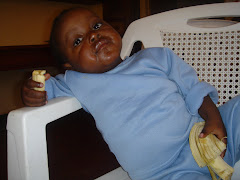
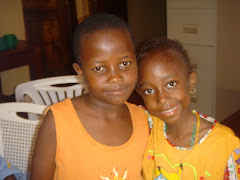
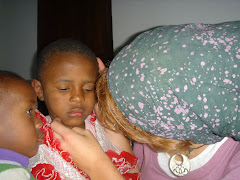
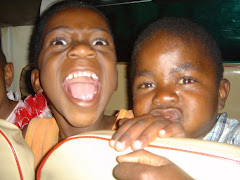
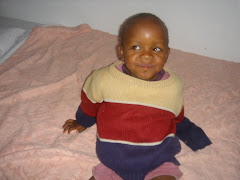
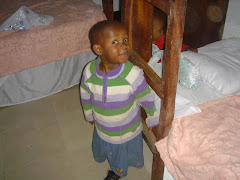
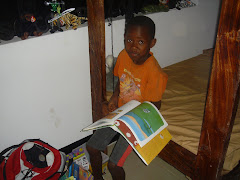
Enough about my research paper. That’s boring. I want to write about my favorite pastime at Hannan Crusade – the kids. Since Wednesday was pediatric day at the clinic, the entire education room was transformed into a playground. I kept sneaking away from my files to teach the girls paddy-cake or chase the boys around the room. Most of the kids were too young to have yet picked up any English, so our only verbal communication was through laughter. It made me miss St. Lucia so much. And it made me realize just how unexpectedly you can be hit with your own unfair perceptions of poverty. I would usually make the argument that the kids in Tanzania have far less than any of the children I’ve met in South Africa. There are fewer resources, less education, and there is certainly less medication available in TZ. I know that that is an ignorant and over-generalized statement, but it is one I would still go with if asked, “who has more?” But playing with these Xhosa-speaking children reminded me that I am STILL defining poverty by my own Western indicators. Subconsciously, I was thinking that these kids had less because they knew no English. The kids at St. Lucia are surrounded by so many English-speaking volunteers that even the littlest ones, the Three Musketeers (as my Mom and I like to call them) can understand a few basic conversational phrases. I was still translating English into wealth, and wealth into wellbeing. But if I were at home, I would probably choose the kid with the loving family over the kid with the trust fund as the one who had it best. I don’t know if this is because it is so incriminating of our fixation with money that dissuades me from making the “shallow” choice, or if it is because in America, even if you do not have money, you stand a better chance of finding yourself in some form of safety net than you would in South Africa or Tanzania, or any other nation with a lesser developed infrastructure for essentials such as health and education. If the Xhosa-speaking children were still fortunate enough to have their parents, while the St. Lucia children are all orphans, than by the same indicators one should find that the South African kids as better off. I know that I am just thinking on paper right now and that none of this is worth your time, but I just have to remind myself of my own double-standards sometimes so that I do not define problems of poverty by American ideals such as lack of English literacy. I also need not even answer the question of “who has more,” because I am not now, and will never be, in the position to have the correct answer. My values have been shaped by my home, my comforts and my perceived needs. The children at St. Lucia do not want for food, but, as Cecilia reminded me, they certainly do want for mothers and for love. As for the kids who come with their mothers to Hannan Crusade, who am I to know what they want or need? Who am I to judge that because they are not learning English, they are not receiving an education? I have to keep asking myself these questions so as to avoid addressing problems as I perceive them and to continue to concentrate my efforts on the obstacles for which the community asks my help. And I have to remember that my limited knowledge of the world outside the US is not always sufficient for comparison. There are endless factors, such as political climates, to name just one, that impact quality of life for a child in any country. I cannot draw up lists of pros and cons, and I cannot try to form linear relationships between countries in which I have only been a guest for short periods of time. It’s kind of like that saying that the older you get, the more you realize how little you know. Well, the more I travel, the more I realize my own biases and preoccupations, and the more I surrender to my ignorance and strive to free my mind from its trained patterns of thought.

Wasn’t I supposed to be talking about kids? Right. Back to that. I think I’ve completely forgotten how to paragraph or use grammar (not that I ever knew grammar). I don’t know how any of you are still reading this. If I weren’t so lazy I’d go back and edit, but sorry, no time. I believe that some pages back I mentioned that my handwriting was trumped by a toddler. This particular toddler and her mother were actually the catalyst that sparked my interest in writing my paper on the Sizophila counselors. It was mid-morning on Wednesday, and I was hidden behind a mountain of file folders on the floor in the counseling room. In walked a mother of about 30, two-year-old daughter in tow. At first I did rather well, I kept to my work and did my best to ignore the adorable little girl that was now stalking me from behind. But inevitably she won my attention. She began nuzzling her head into my side to get my attention and imitating my motions as I tore through files. I surrendered to her and we started making faces at each other, each taking turns puffing up our cheeks with air and squeezing the air out of the other’s cheeks with our fingertips. She loved to make the Xhosa clicks, and she loved even more to laugh at my attempts to copy her. After some time, I felt a little guilty though and thought that I should get back to work. I discovered an empty chair and snagged it to get to work on an actual counter, from which the adorable two-year-old would be out of view, and thus, out of temptation. However, my little friend then countered my discovery with one of her own – my chair had wheels. Just as I set my pen to paper, I was whisked back and away by this toddler, now roaring with laughter at her ability to maneuver me around the room (I have to admit, I helped a little with my feet, can you blame me?). At this point, we were just obtrusive. Counselors were all around, files were sprawled across the floor, and I was just bumping into and irritating people left and right for the amusement of a little girl. I finally learned some respect and scooped up the child into my lap, fed her a pen and paper, and let her color along side of me as I did my work. She tried to chart lines as I made my tables, and had she been writing numbers too, I can guarantee that Nokwayiyo would have had a better time reading hers than mine. It was not a rare occurrence that Nokwayiyo would struggle to decipher a nine from a four, and if I had written a name that I could not even pronounce, then you could be sure the spelling was probably off. I seriously considered taking on this two-year-old as my scribe for the rest of the study.

After all of these games and distractions, I finally started to realize that it had been a long time since this child and her mother had entered the room. A normal counseling session didn’t run this long. I looked over at the mother to find that she was crying, and all of a sudden I was awakened from the infantile mental state in which I often reside and thrown back into the reality of the HIV clinic in which I was presently located. I looked back to the little girl, not knowing whether the mother was here for her own health, or, since it was pediatric day, if she was here for her daughter. And in all likelihood, she could have been there for both. I don’t know whether this mother was afraid for her life, afraid for her child, embarrassed, ashamed or simply just overwhelmed, but whatever she was feeling at that moment, it was worlds away from where I had just been with her daughter. I started paying more attention as the counselor assigned to her listened and responded to the mother’s concerns. Soon I saw Nokwayiyo, my own mentor, leaving (regrettable, I’m sure) her own disheveled pile of phone numbers to stand by a mother in need. Before I knew it, four counselors had surrounded the woman and four voices were affirming her feelings and dismantling her fears. Voices were rising as you would hear in a church, and the passion radiating from the counselors was tangible even to the non-Xhosa-speaking audience, namely, me. I turned my attention again to the little girl (because she was again trying to drive me around the room in my chair), and I sat her down on my lap to draw a picture for her mom. As she drew, I thought about the many years in school in which I had been given the opportunity to make various arts and crafts for my own mother and I wondered whether this little girl would be afforded the same opportunity. Not only may she not even be able to attend a school with art supplies, but she may not have a mother for whom she could draw a picture at all. Suddenly her happiness seemed so fragile and finite. Suddenly I felt heavier as she pushed me around the room. And suddenly I wanted, more than anything, to just be left alone to cry.

This moment reminded me of the loss of so many children across the world, of the loss of the kids at St. Lucia, who, because I never knew their mothers, I often forget have suffered such a deep loss at all. I watched the young mother walk out with her daughter, face still splotchy, but head high and eyes dry (two-year-old still clicking her tongue all the way), and I hoped that that little girl would be able to draw her mother pictures for years to come. I looked back at the room I was left in and felt an intense rush of pride to be able to work alongside these women. The Sizophila counselors had picked up a mother in despair and turned her away with confidence. I can never know the full impact they have had on that mother, on her readiness to take her medication, and ultimately, on her ability to survive, but I can imagine that without that humanitarian link, of HIV positive person-to-HIV positive person, one might feel a lot more alone. If the Doctor had been the only available resource for this mother to air her concerns, would she have been comfortable asking the difficult questions? Would she have left feeling more isolated and ill than united and empowered to impact her own health? I immediately knew that these counselors would be the focus of my paper, if only for the excuse to interview them and get to know them more intimately as local heroes and community leaders. Maybe I’ll even get to see one of their follow-up visits with the mother I saw that day, and maybe I’ll get to know what it was they said to her that got her on her feet again. And maybe I’ll get to step back into childhood once more with her daughter.

It’s movie time, ladies and gents. I guess I’ll post this when I’m on campus on Friday. Hopefully I’ll get to write more soon.

Friday, October 5, 2007

It's been a while

I have to admit, over these past few days I have DREADED writing this blog entry. So much time has gone by, and there is so much to say. I am going to have to be less detailed than in the past; I’ve even considered just bulleting things that I want to share. But with that, I must also apologize to mi familia for not writing sooner. I think I have at least a few valid excuses that should pardon my tardiness. Regrettably, I truly cannot remember much of the timeline of these past few weeks, so I will try to just mention the big points. More than ever I wish I had the time to journal, but between our internships and our schoolwork I have barely been able to stay awake long enough to turn out the light each night. This is the first night since I last posted that I have not been either buried in schoolwork, in a hospital, or off traveling somewhere.

So far starters, we all finally made the touristy trip up Table Mountain in the cable car about two weeks ago. We considered hiking it, but all of us are glad we didn’t as we would have frozen to death somewhere on the side of the mountain. Maybe we’ll hike in December right before we leave. Our trip to the top was abbreviated by the fierce winds and bitter cold that pretty much ordered us into the restaurant for hot chocolate, where we gathered the strength to face the winds for a few pictures before coming back down again.

Geez, I can already tell that this entry is going to be painfully scattered. I wanted to attempt to follow some sort of chronological order, but it just doesn’t seem right to wait to mention that we had an extremely ironic, though thankfully not as frightening, role reversal in terms of health status in these past few weeks. Almost two weeks ago, I went with Alison to the ER (which is called the “casualty” here) because she was in a tremendous amount of pain in her abdomen. This wasn’t new for her, but it was worse than it had ever been and we all feared appendicitis. It was extremely peculiar to be in this situation with Alison when about 16 months ago she was my caretaker in the hospital in Tanzania. Fortunately, I was not saddled with the same responsibilities or fears that Alison had to deal with when I had malaria. For starters, the hospital was more modern than my own hometown medical center. Not only were there no dirty needles on the floors, but there was toilet paper in the bathrooms and there were gloves in the cabinets – strikingly different from TZ. Aside from the comfort of being in an English-speaking hospital that felt just like home, I also had the benefit of knowing that Alison was going to be okay. She already felt much better by the time we saw a doctor, and in the end she was discharged without needing surgery. Basically, it was just a day in the lives of Alison and Jillian, two college students taking on the world, one healthcare system at a time.

But those of you who know the two of us should already know that the story does not end there. Persistent as Alison is, she decided that one tour of the Christian Barnaard Memorial Hospital was not enough. Just 6 days after her initial visit, during a follow-up appointment, it was deemed time for her appendix to say farewell to her other insides. Fortunately, this was on a Friday, and we had rented a car for the weekend and were able to use it to visit Alison in the hospital and bring her things she needed. I spent the night in the hospital with her, again more comfortable and peacefully than she had experienced with me in TZ. There were no violent hallucinations or painful injections; the only interruptions were when the nurses came in to help her to the bathroom and see if she needed anything. The quality of care and emphasis on patient satisfaction here mirrors the healthcare system of the US. The nurses were more than willing to answer our questions and explain things to us on demand. I actually spent much of the night there journaling about the peculiarity of our circumstances while Alison slept. But it seems awkward to include those thoughts now because I wrote so much on the comparisons between this hospital and the AICC hospital in Tanzania, and none of it is really relevant to the story now at all. In addition, it might be a little overwhelming to include a few pages on my views of the healthcare system and its inequalities when the rest of this entry is going to be so terse.

So I’ll keep with the trend and skip ahead to another topic. Alison was doing well on Saturday, and she pretty much demanded that we take the car we had rented and go somewhere. We went to Kirstenbosch, a beautiful botanical garden in Cape Town. It was a warm and sunny day and we all collapsed on the grass after a picnic for some long overdue sleep. Brendan and Kristen, I really wished you were there. This was a place you would have loved. Table Mountain was the backdrop, and the only directional marker for us in the vast gardens and forests. Apparently starting in November there are outdoor concerts held there on Thursdays that we are hoping to attend. It’s now Broken Social Scene over Thanksgiving break, but it’ll have to do. Dad, I think it might even beat the Deer Path Park shows. Maybe you should come check one out and see for yourself?

We finally tore ourselves up out of the grass and forced ourselves to leave in order to find a beach in time for sunset. I had given serious thought to hiding in the Enchanted Forest (yes, it is actually called that) while the garden closed so that I could stay there over night. But we forced ourselves on and eventually found a rocky beach where we could be alone with the sunset. Chris and I thought it wise to climb the largest rock in site (which wasn’t even that large, just slightly awkward and hard to grip). I ended up spending most of the hour fearing that the wind was going to blow me off and into the water. I wouldn’t even take any pictures of the sunset because I was too afraid to take my hands off the rock. Chris will be supplying me with his photographs that I would just pass off for mine if it weren’t for this admission. Family, you can probably hear my girly shrieks of excitement and fear on that rock if you just think back to any number of my clumsy or scary experiences (read: me stubbing my toe and running around the house singing/screaming, or, god forbid, molding mouthguards for soccer when I was just a young tot). Why do I shriek so much?

By the time the sun had set we wanted to head back to the house because Alison, against all odds, had gotten herself discharged from the hospital a day early. She was in slightly more pain now that she was off the IV pin killers, but she was looking good – not at all like she had just had surgery 24 hours earlier. With Alison recovering, we all used her as an excuse to stay in and crash on a Saturday night. The next morning we would be leaving at 5:30 am to go shark diving, so we really just went and picked up my friend Dan (who was coming with us) and went to bed.

Sunday was awesome. The ride to the bay was about two hours, and none of us were sure if this was going to be worth our money or, more urgently, our lost sleep. When we arrived at the headquarters I was nervous that our rate was going to increase due to several cancellations in our group. Alison’s surgery was an acceptable excuse, but we were still a few people short from our original booking. But I introduced myself to the manager as the person who made the reservation, and nothing was said about any rate changes. We all paid our bills with great relief and headed out towards the boat. For about the first half hour I doubted whether we were going to see any sharks at all. The crew insisted that we would, but I suspected that someone may have just made a pretty penny off of my touristy vulnerability. Just as suspicion and seasickness were starting to get the better of me, I heard a call from the back of the boat that we had our first shark. From there on out we were the hot spot of the ocean. When one shark left, another quickly found us. We even got to hang out with a HUGE southern right whale that was just a few feet from our boat. As for the actual cage diving, we were a bit unfortunate because the water visibility was only about 2 feet. Some of the divers did see sharks under water that were two feet away from them, but when I was diving I only saw them with my head above water, when they were probably three and four feet away from me. What was scary was that the water was so rough that it was all but impossible to keep your extremities inside the cage. I found it funny that the crew emphasizes the importance of keeping your limbs inside at all times, but they use a cage with gaps so large that your entire leg can float out. I was given the front of the cage as well, so I was faced with three sides, rather than two, from which the shark could chomp at my toes. It became a game to see what positions were best for keeping yourself inside, but really none of it was too scary because the sharks were far more interested in tearing into the fish bait than they were the human bait. Apparently, we don’t taste very good.

Shark diving ran a bit late, which was out of our control, and we didn’t return until about 6:15. Dr. Bender had scheduled for us to view a film for class at 5, even after we had all told her our plans and stressed that we did not know if we could be back in time. To make a long story short, she was more than a little ticked off. She took it as disrespectful to herself and the program, even though weekends are our only time to travel and escape the stresses of the week. She, on the other hand, teaches a course once a week and has the rest of the week to go off gallivanting through Cape Town. Even when Alison was in the hospital she decided to take off for Stellenbosch. Furthermore, she is not even conducting any research for the University while here. But anyway, I don’t even want to go into all the nasty details, because Sunday through today have pretty much had everyone on overdrive with stress and rage. Dr. Bender sent us an email telling us she was disappointed with our work, and we tried to invite her over to talk to us about her expectations, and consequently give us an opportunity to air our grievances. For example, the assignment of writing a four-page paper on a conversation with a character from the film viewings is intellectually insulting to juniors and seniors in college. We have enough work here that we do not need such childish assignments, and we all feel that we are being chained to this house to do work so that we cannot take any risks by going into Cape Town. Dr. Bender has said on numerous occasions that it is not safe to go out, so I don’t even understand why she has come here. If we are never going to leave the house, and if we are going to waste our time writing movie papers when we should be investing in our research papers, we are all going to leave here feeling regretful of coming in the first place.

The week dragged on, everyone bogged down in papers and projects, until last night, when I pretty much castrated my reputation with Dr. Bender in the name of our dignity and our time. Bendie, as we have endearingly taken to calling her, was over our house to have one-on-one talks about our research papers. I respectfully asked her if I could speak with her for a few minutes about mine since my job description had just changed yet again the day before and my topic again had to be scraped. She said no, and said that it was getting late. I then asked if she had received the email the class wrote asking to discuss some issues related to the course and asked if we could discuss them perhaps the next day. Again, she said no, because she wanted to go to a wine tasting after class. I finally just put myself on the chopping block and said that we needed to discuss the movie assignment because we felt it would be far more beneficial to have a discussion. She didn’t take that very well. Her response was,” So what, you just don’t want to write it? Is that it?” Wanting to be honest, I told her that we felt so stressed about time already and we felt this would only take away from our time for more important assignments. After a few more snippy comments and a lot of stern body language she said “fine, you can tell everyone they don’t have to do it; I can’t.” So that was that. Now Bendi hates me, but at least I am able to sit here and write this entry instead of writing yet another pointless paper.

I am getting pretty tired now though and I’m not sure I can keep going much longer. I think I’m gonna cash in and just finish this post after class tomorrow.

10.5.07

I’m baaaaaaaaaaaaaack. Class just got out and we unfortunately had to cancel our plans to take off for Stellenbosch this weekend because the car we had rented was in an accident. So now I have time to stay on campus for a while and catch up on emails.

Jimes, I am talking to you right now, and I wish I could just curl up in moso 206 with you for a lazy afternoon. I finished the Audacity of Hope, so we could finally discuss it together and maybe even have another discussion about transsexuals for old time’s sake. Ahhhhh, I miss you!

I guess I should try and write a little bit about my internship since a few of you have asked and I have yet to really mention it. For the past few weeks I have been bouncing around the DTHF, trying to find my place. I don’t even know if in my last post I mentioned working with an American Doctor from Puke, I mean Duke. I’m too lazy to go back and read through what I wrote so I’ll just repeat myself even if I already mentioned him. This Doctor is here doing research for his PhD on HIV and TB co-infection. He conducts his work in Gugletu, a township outside Cape Town with one of the highest incidence rates of TB in the Western Cape. I was at first going to just kind of shadow him and help with his data collection, but this week the executive director called me into her office to tell me that she did not think he needed my help and that I could be more useful in this pregnancy study that is also taking place at the ARV clinic in Gugs, as it is commonly called. I haven’t been given all of the specifics yet, but it looks like the foundation is collecting the data in collaboration with the Dept. of Public Health to do a study on the effectiveness of triple-therapy in pregnant woman. I think they are also looking at adherence rates and the status of the children, but again, the details have yet to be disclosed to me. Right now I am just pairing up with one of the counselors there to tear through a room full of files and track down all the women who have been patients at the clinic. I’ve been finding the numbers, and Nokwayiyo has been making the calls to set up interviews. There are pages and pages of names, so it may be some time before we can get to everyone. But if all goes well, I will be helping with the interviews and the compilation of data that will be used to publishing. Therefore, my name would get to be published on the study alongside all the doctors and PhD’s. I wouldn’t hate that.

As for my actual experience at the clinic, it has only solidified my uncertainty about my career plans. It has been exactly the experience I could have hoped for, and in that sense, exactly the experience that makes me question whether or not I want to go to law school. For my first few days at the Hannan Crusade Clinic, I was working with Dr. Dave, sitting in on his examinations and meeting with patients. His study takes people who have tested positive for HIV but have not yet started ART and are willing to donate their time for some further testing. He screens them for TB with an x-ray, sputum sample, blood test and urine sample. More often than I’d like to admit, the patients do turn out to have TB. They are then are started on 6 months of TB treatment, and for the first five months they given that exclusively. After 5 months, ART is introduced. This is because if you start them at the same time, the combination can be toxic and sometimes even lethal. One needs to either be on ARVs for a long period of time before beginning TB therapy, or he/she needs to start TB treatment before taking ARVs. Dave is trying to discover benefits of waiting five months to start ART in order to determine the most appropriate time to introduce the anti-retrovirals.

Working with Dave has given me a lot of exposure to medicine, and in some ways, has made me wish I had the stomach for it. One patient has extra-pulmonary TB in his lymph nodes, so it sort of looks like he has ping pong balls on either side of his neck. A tissue sample had to be collected for testing, which involved probing his neck with an uncomfortably thick needle until they had collected enough gunk for the lab. Watching that reminded me of why I couldn’t be a doctor.

What has been most interesting for me in working with Dave is the interview part of the examinations. The tough questions, like the ones about safe sex and partner disclosure, always illicit questionable answers. One of the men we interviewed said that he has not been sexually active since he was diagnosed a year ago, but that he has two girlfriends with whom he now uses condoms. It’s hard in such a brief time to earn the trust of patients who fear our judgment. And that’s the exact area that I feel the Doctors often skip over for the sake of time. They don’t have time to build rapport with their patients before jumping into intimate issues. It’s too bad, because I feel they are losing ground in effective counseling because of this haste. But I’ll get to that later. There are some really amazing HIV counselors at this clinic for whom I am quickly erecting pedestals. I could write an entire entry on them; maybe sometime soon I will. But back to the interviews, I have been fascinated not only by the answers to the personal questions, but also by the cultural context in which these patients are ill. One man says he has night sweats and coughs blood, but he actually has a job (unlike most in thie community) so he can’t just take off work to see a doctor. Another man lifted his shirt for examination to reveal a scar from his breastbone to his bellybutton. It was a stab wound from years ago, back when black/white relations in Guguletu were far from peaceful. I didn’t even know how to respond when he started to explain that one….

I hope that I can come back to writing about my job because there is just so much I want to say. But I’d really like to get off campus and GET FOOD right about now. Everyone else is leaving and I don't want to take the bus back alone. So maybe tonight I’ll write more about work. Wednesday was pediatric day at the clinic, so you can imagine how much I’d have to say about that. The kids owned me all day and I got very little work done. For now, I must say goodbye. I am sorry that this was such an awful post. I gotta step it up.

Promise to write again soon…