Hello again. It’s Sunday afternoon here, finally a day with a little down time to write. I am not sure when I’ll actually get to the internet to post this, but I have some free time before our movie for class and I thought I should get some stuff down. Where should I even begin this time? I want to discuss the environment at Hannan Crusade, but even just tackling one clinic seems it could take hours.
I suppose I can set the stage by sharing that the Hannan Crusade Clinic is pretty much how most people would envision an HIV/AIDS clinic in sub-Saharan
And Hannan Crusade is not a free-standing establishment. It shares a plaza (I can’t think of anything better to call it) with the Green Clinic, from which most of Hannan Crusade’s patients are collected. The Crusade does not actually do any HIV testing; that is done across the way at the Green Clinic. Once a person has tested positive, he/she is referred to the Crusade for counseling and treatment. Now that Dr. Dave is conducting the TB study, patients are also referred to him if they present with symptoms of TB, though there is an official TB clinic somewhere in the area where most people receive treatment. Actually, any patient who is HIV positive and has yet to begin ART can participate in David’s study, because he is also interested in uncovering the incidence rates of TB in the patients he sees, rather than only examining those who show up with classic symptoms. At the Hannan Crusade I have only seen one masked patient with TB, but I am still hoping to get to visit the official TB clinic with David at some point to get a better picture of how this disease is really affecting the Guguletu community.
I was about to refrain myself, but I think I should actually include a tangent about Guguletu to give you a little background of its history. Guguletu, or Gugs, is one of four black townships created throughout the 20th century by the Apartheid government to cleanse the city bowl of “impure” races. Langa was the first township constructed, I believe in the 1920’s or 30’s. Then there is also Nyanga, Gugs and Khayalitsha (I think I just slaughtered that spelling). So for an entire race to be removed froma city and forced into 4 townships, you can imagine these townships would have to either be extremely large or extremely overcrowded. If you guessed the latter, you would be correct. In actuality, the townships are indeed very large, but not when you consider populations of hundreds of thousands, and even to millions of people who reside there. Knowing all of this, I hope you can better appreciate the strain on this clinic and the sheer exhaustion of staff and resources that must be combated. I do not even think that I, after working there, have fully realized the organizational nightmares that this Crusade has overcome in order to function in a community so under-served.
But organization could certainly be improved, and this segways nicely into the amusing woman-hunt that is my job. Now that I am no longer really assisting David with his study, I spend most of my time tracking down women who are currently or have been patients at the clinic. I work with Nokwayiyo, one of the Sizophila counselors, to collect the names and numbers of these women in order to interview them about HIV and pregnancy. Nokwayiyo is incredible. I think back to my few days with Nosee in September and I thank Heaven that I am now working with Nokwayiyo. When first assigned to this research project, I was apprehensive about how I could step into it without stepping on Nokwayiyo. A few months ago there was an American med student working on the study, but since he left Nokwayiyo has been saddled with the work. For a counselor who already has between 50-100 patients for whom she is responsible, this study can be nothing more to her than an afterthought that she can work on in her downtime, if she even has any at all. Thus far, she has simply looked at the list of patients each morning to see if any of them also appear on her list of women whom she needs to interview. If luck strikes, she interviews 2 or 3 women a day. At this snails pace, the study could be done in a few years. So here I was, feeling more bashful than usual, approaching Nokwayiyo and offering my labor. Fortunately, she was thrilled to have an extra set of hands and she welcomed me warmly. We decided together that it would be more efficient for her to try and call these women and conduct interviews over the phone. Since most of these interviews take place in Xhosa, my ability to be of any use in the actual data collection was immediately eliminated. But boy can I be useful in tearing through a room of files, hunting down names and numbers. With no computer access and not even a desk to sit at, I started drawing my own spread sheets of names and numbers, alternative numbers if friends or family members are disclosed of the patients status, and ages if no numbers are available so that we can just rule out the 60-year-olds all together in considering recent pregnancies. All the years of practicing my awful handwriting have really paid off in this area. I seem to have mastered the art of making charts that could be trumped by a 2-year-old, and one might even say they were on Wednesday. But I will come back to that.
Things started to work like clockwork; I’d come in the morning and assume my position on the floor with the files, passing off sheets to Nokwayiyo as I finished for her to make the calls. We’ve already interviewed 10 times the number of women last week than she would normally have been able to reach. The only real obstacle is finding all of the files. Obviously there are going to be women with no contact information, though most have been able to at least list a neighbor or a friend if they do not have their own phone. But after finishing the entire room of cabinets on Wednesday, I looked back to see that not even half of our list was found inside these drawers. The rest of the files will be found (hopefully) in the green clinic, but I suspect that many of them will never be found at all. It’s frustrations like these that make me appreciate computers.
Anyway, once we have found all the numbers and made all the calls, we will analyze the data to see what therapies are most effective for pregnant women. We will unite our data with the data of the South African Department of Public Health to publish a study, hopefully all by the time I leave in December. I just look forward to the interviews that will take place in the clinic, because Nokwayiyo has such an authority when she speaks, such a convincing presence, and I am anxious to hear the translations of what she is saying in these women. I’ve watched her at work in her counseling; I’ve listened as her voice rises to stifle the tears of a newly diagnosed patient. I’ve studied how her body language adapts to the person in front of her; whether a mother needs comforting or a young man needs his pride restored, she can find the right demeanor in a heartbeat.
I guess it has been studying Nokwayiyo that has finally inspired a feasible topic for my research paper this semester. I can no longer do a study on the vaccine trials, partly because I am no longer at the trial center, but mainly because the Merck vaccine that the DTHF was testing has just been proven ineffective and pulled from trials all together. Additionally, I am finally resigning myself to the restrictions placed on my research by the confidentiality agreements I must uphold. I will not be able to center my paper on patient studies because I would have to first be approved by the IRB. So, Nokwayiyo is who I want to study. I again have to apologize if I am repeating myself from my last post, but you should all be used to me repeating myself by now. I don’t know if I already wrote much about the Sizophila counselors, so I am going to write about them again. Sizophila means “We Will Survive” in Xhosa. It is the mantra of these counselors as they carry patients through the stage of acceptance and then through a month of education and preparation for treatment, and finally through anti-retroviral therapy itself. All of these counselors exude pride and emanate human beauty. At some point, some of them were on their last legs, but due to ART, they look no different than any other South African you may encounter. A few of them, like Nokwayiyo, do have lesions and rashes that may tip off their positive status, but somehow it makes no difference because their confidence conceals their illness. In fact, their frailty seems appreciated by the patients who can see that despite their illness, they are still thriving. I love that I can sit in their workroom as I gather up numbers because I feel I am getting to know their personalities as I watch them counsel their patients. I’ve even sat in on a weekly review meeting, in which one of the counselors was discussing the dilemma of how to get medication to an HIV-positive child whose parents were gone. The child lives with her grandmother, who is too weak to make the monthly journey to the clinic to pick up her grandchild’s meds. This counselor had visited the woman’s home, counseled her on the importance of the medication, and tried to find a neighbor or friend who could bring the child to the clinic. Until the issue is sorted out, the counselor herself will continue to make the journey to supply the child with her medication. Somehow I suspect that this is not a unique occurrence, and somehow I doubt that these counselors are just going home after work. It seems their work continues around the clock, as they are living in and caring for the same community. There are no hour-long commutes to a hospital or clinic in another town like we would see in the States. These women are caring for their neighbors, their fellow community members, and, in this way, they are also contesting stigma and encouraging acceptance of those who are HIV positive.
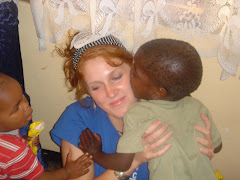
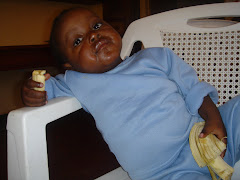
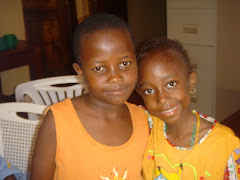
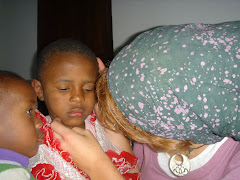
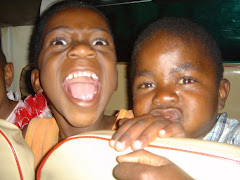
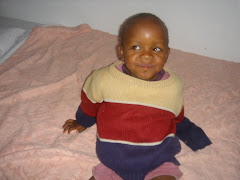
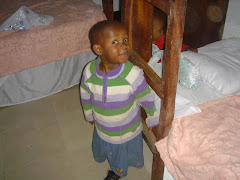
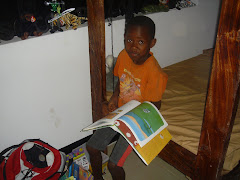
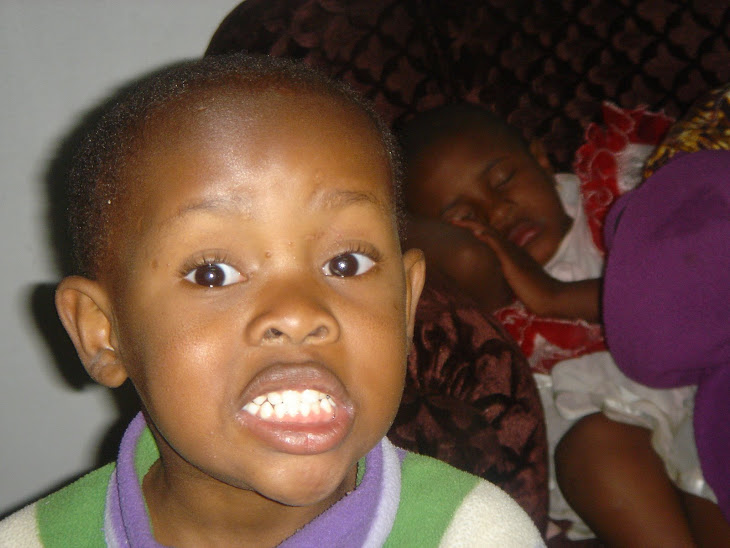
Enough about my research paper. That’s boring. I want to write about my favorite pastime at Hannan Crusade – the kids. Since Wednesday was pediatric day at the clinic, the entire education room was transformed into a playground. I kept sneaking away from my files to teach the girls paddy-cake or chase the boys around the room. Most of the kids were too young to have yet picked up any English, so our only verbal communication was through laughter. It made me miss St. Lucia so much. And it made me realize just how unexpectedly you can be hit with your own unfair perceptions of poverty. I would usually make the argument that the kids in
Wasn’t I supposed to be talking about kids? Right. Back to that. I think I’ve completely forgotten how to paragraph or use grammar (not that I ever knew grammar). I don’t know how any of you are still reading this. If I weren’t so lazy I’d go back and edit, but sorry, no time. I believe that some pages back I mentioned that my handwriting was trumped by a toddler. This particular toddler and her mother were actually the catalyst that sparked my interest in writing my paper on the Sizophila counselors. It was mid-morning on Wednesday, and I was hidden behind a mountain of file folders on the floor in the counseling room. In walked a mother of about 30, two-year-old daughter in tow. At first I did rather well, I kept to my work and did my best to ignore the adorable little girl that was now stalking me from behind. But inevitably she won my attention. She began nuzzling her head into my side to get my attention and imitating my motions as I tore through files. I surrendered to her and we started making faces at each other, each taking turns puffing up our cheeks with air and squeezing the air out of the other’s cheeks with our fingertips. She loved to make the Xhosa clicks, and she loved even more to laugh at my attempts to copy her. After some time, I felt a little guilty though and thought that I should get back to work. I discovered an empty chair and snagged it to get to work on an actual counter, from which the adorable two-year-old would be out of view, and thus, out of temptation. However, my little friend then countered my discovery with one of her own – my chair had wheels. Just as I set my pen to paper, I was whisked back and away by this toddler, now roaring with laughter at her ability to maneuver me around the room (I have to admit, I helped a little with my feet, can you blame me?). At this point, we were just obtrusive. Counselors were all around, files were sprawled across the floor, and I was just bumping into and irritating people left and right for the amusement of a little girl. I finally learned some respect and scooped up the child into my lap, fed her a pen and paper, and let her color along side of me as I did my work. She tried to chart lines as I made my tables, and had she been writing numbers too, I can guarantee that Nokwayiyo would have had a better time reading hers than mine. It was not a rare occurrence that Nokwayiyo would struggle to decipher a nine from a four, and if I had written a name that I could not even pronounce, then you could be sure the spelling was probably off. I seriously considered taking on this two-year-old as my scribe for the rest of the study.
After all of these games and distractions, I finally started to realize that it had been a long time since this child and her mother had entered the room. A normal counseling session didn’t run this long. I looked over at the mother to find that she was crying, and all of a sudden I was awakened from the infantile mental state in which I often reside and thrown back into the reality of the HIV clinic in which I was presently located. I looked back to the little girl, not knowing whether the mother was here for her own health, or, since it was pediatric day, if she was here for her daughter. And in all likelihood, she could have been there for both. I don’t know whether this mother was afraid for her life, afraid for her child, embarrassed, ashamed or simply just overwhelmed, but whatever she was feeling at that moment, it was worlds away from where I had just been with her daughter. I started paying more attention as the counselor assigned to her listened and responded to the mother’s concerns. Soon I saw Nokwayiyo, my own mentor, leaving (regrettable, I’m sure) her own disheveled pile of phone numbers to stand by a mother in need. Before I knew it, four counselors had surrounded the woman and four voices were affirming her feelings and dismantling her fears. Voices were rising as you would hear in a church, and the passion radiating from the counselors was tangible even to the non-Xhosa-speaking audience, namely, me. I turned my attention again to the little girl (because she was again trying to drive me around the room in my chair), and I sat her down on my lap to draw a picture for her mom. As she drew, I thought about the many years in school in which I had been given the opportunity to make various arts and crafts for my own mother and I wondered whether this little girl would be afforded the same opportunity. Not only may she not even be able to attend a school with art supplies, but she may not have a mother for whom she could draw a picture at all. Suddenly her happiness seemed so fragile and finite. Suddenly I felt heavier as she pushed me around the room. And suddenly I wanted, more than anything, to just be left alone to cry.
This moment reminded me of the loss of so many children across the world, of the loss of the kids at
It’s movie time, ladies and gents. I guess I’ll post this when I’m on campus on Friday. Hopefully I’ll get to write more soon.


4 comments:
Hi Jilly, reading your entry brings me to tears. I really feel like I am in that room with you.Your writing is so descriptive.I hope you see that little girl again. Talk to you Sunday. Love, Mom
Jill,my hero, carry on with the sensitivity and love that is so evident in your latest (and all) your postings. I think about you very often. Stay well and happy. Love Grandma
Jill....all I have to say is "WOW". Every single child that crosses your path is surely blessed...you have a special love inside of you that not many people have, and not enough understand... take care of yourself, and be well!!! We miss you and will speak to you on Thanksgiving :) Love, Aunt Eileen
Since you seem so dead set in experiencing (by proxy, at least) the abject horror of my Friday afternoon of fall break, I have pictures for you.
Why I feel the need to acknowledge your (very emphatic) request is beyond me, but I suppose that since you asked so nicely, I just can't help myself and my generous nature...
Post a Comment